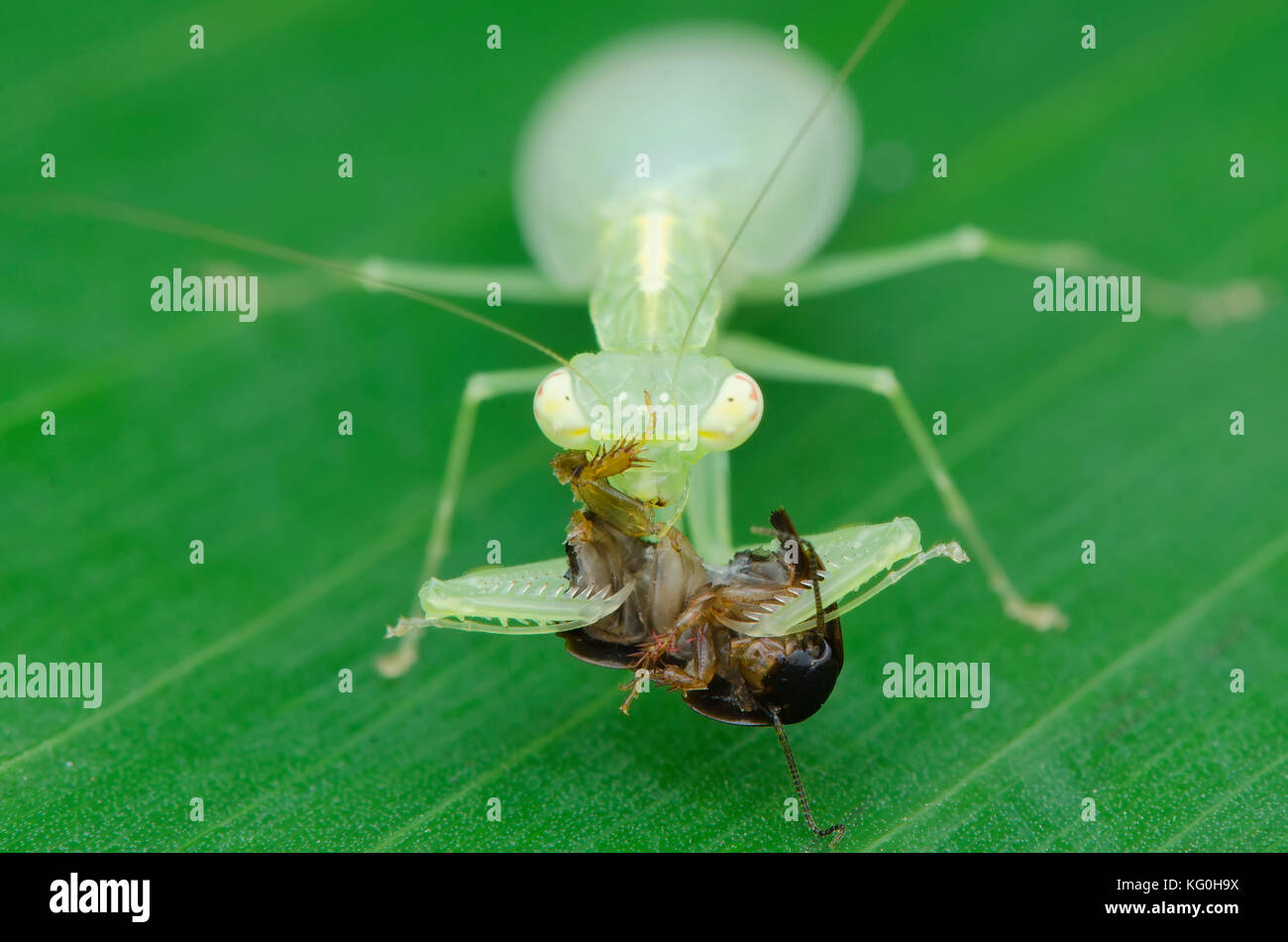
praying mantis feeding on roach Tropidomantis Tenera malaysia Stock Biology Diagrams Where is the praying mantis on the food chain? Although they may be at the top of the insect food chain, these insects are preyed upon as well by bats, spiders, snakes, and birds.
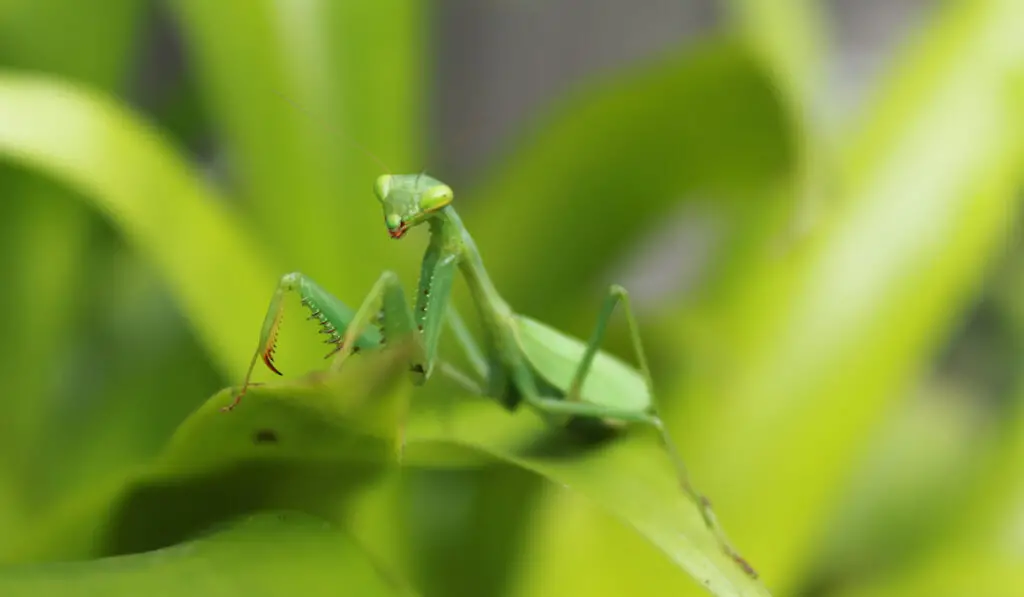
The common praying mantis generally hangs out in the backyard, frolicing through the grasses and in various trees and bushes. The praying mantis lives most places where there is a garden or healthy greenery and foliage. Did you know that praying mantises are much like chameleons, the habitat of the praying mantis will affect their colour.

What do Praying Mantis' Eat? A Complete Guide Biology Diagrams
Are praying mantis victims to other predators? Even though the praying mantis is a ferocious and predatory insect, it does not mean they are safe from other insects or animals. As previously stated, a praying mantis can fall victim to their own kind - another praying mantis. Praying mantises are carnivores, meaning they eat other animals. They are also generalist predators, meaning they eat a variety of different prey items. The type of food that a praying mantis eats will vary depending on its size, age, and availability of prey. Praying mantises are ambush predators, meaning they wait for their prey to come to them.
In conclusion, praying mantis are important predators in the garden, feeding on a wide variety of insects and other small invertebrates. By understanding what they eat and how they hunt, gardeners can appreciate their role in maintaining a balanced ecosystem and learn how to attract these beneficial insects to their gardens.

Where is the praying mantis on the food chain? Biology Diagrams
Human intervention in providing Praying Mantis food successfully includes ensuring sufficient food and slight hydration. While water isn't a primal need for mantises, a small bowl of water becomes necessary in a heated cage, which provides favorable humidity. An alternative to a water bowl is misting the cage once a day. The food needs of praying mantises vary based on factors like species, development stage, size, and health. Adult male mantises typically require less food than females. Notable food sources include Dubia roaches, which are high in protein, along with fruit flies and superworms. Occasionally, they may eat arachnids or small vertebrates like mice, frogs, or even fish.

Praying mantis: This garden insect is carnivorous and feeds on other insects, lizards, frogs, and even small birds. It is an ambush predator.
